Most people assume opening a home decor shop is straightforward: find a space, stock some products, and wait for customers. The reality is more structured, and for entrepreneurs targeting Europe’s premium segment, far more rewarding when done right. The Scandinavian-inspired home decor market is growing steadily across France, Spain, Germany, and beyond, driven by consistent consumer demand for minimalist, functional design. This guide explains what home decor franchising actually involves, why the Nordic niche stands out, and what concrete steps you need to take to move from interest to a running business.
Table of Contents
- Understanding home decor franchising
- Key benefits of home decor franchising
- What makes the Scandinavian home decor franchise market unique?
- Essential steps to launch your franchise
- Franchisor support and the power of a strong network
- Why support networks—not just great design—make or break your franchise
- Explore Scandinavian home decor franchise opportunities with Bonordic
- Frequently asked questions
Key Takeaways
| Point | Details |
|---|---|
| Franchising simplifies retail entry | Joining a home decor franchise lets you leverage proven systems, branding, and supplier networks instead of starting from scratch. |
| Scandinavian style offers premium margins | European consumers value clean, minimal design, making this niche both trendy and profitable for franchisees. |
| Strong network support is essential | Success in the competitive European market depends on franchisor backing, peer networks, and ongoing support. |
| Expansion is scalable with the right partner | Franchises with a track record of multi-country success offer lower risk for ambitious entrepreneurs. |
| Actionable steps lead to success | Clear processes—from research to launch and ongoing engagement—make franchising a reliable entry to home decor retail. |
Understanding home decor franchising
Franchising is a business model where you operate a retail store under an established brand’s name, systems, and guidelines. You pay the franchisor (the brand owner) fees in exchange for the right to use their brand, products, and operational playbook. This is different from starting an independent shop, where you build everything from scratch, or buying a traditional retail license, which typically offers no ongoing support.
In the home decor context, the franchisor usually provides branding assets, a curated product catalog, supplier relationships, logistics coordination, and marketing materials. Your job is to manage the local store, serve customers, and follow the system. This structure reduces the time and guesswork involved in launching a retail business, especially in a category like premium home furnishings where brand perception matters enormously.
The interior design business model in Europe has evolved significantly over the past decade. Consumers are more design-literate than ever, and they respond to brands with clear aesthetic identities. Scandinavian design, with its emphasis on clean lines, natural materials, and functional beauty, fits that preference well across multiple European markets.
Here is a quick comparison of the three main ways to enter the home decor retail market:
| Model | Brand support | Inventory risk | Setup complexity | Scalability |
|---|---|---|---|---|
| Independent shop | None | High | High | Difficult |
| Standard retail license | Minimal | Medium | Medium | Limited |
| Franchise | Full | Low to medium | Low | Strong |
Key obligations you take on as a home decor franchisee include:
- Paying initial franchise fees and ongoing royalties
- Following brand standards for store presentation and customer service
- Using approved suppliers and product lines
- Participating in training programs and brand updates
- Reporting sales and performance data to the franchisor
As BoConcept’s expansion in France shows, strong network support is critical for success in competitive premium markets. Franchisors with established systems give their partners a clear edge over independent operators trying to figure things out alone.
Key benefits of home decor franchising
With the basics clear, it is worth looking at why franchising specifically attracts serious entrepreneurs in the Scandinavian home decor space. The advantages go well beyond just having a recognizable logo above the door.
Brand credibility from day one. Design-conscious customers in Europe are selective. They research brands before visiting a store. When you operate under an established Scandinavian home decor brand, you inherit years of brand equity. Customers already trust the aesthetic and the quality promise. This shortens the sales cycle considerably compared to launching an unknown independent store.
Access to supplier networks. Sourcing quality furniture, lighting, and home accessories from European suppliers is not simple. Established franchisors have already negotiated terms, verified quality, and built logistics pipelines. You benefit from those relationships immediately, without spending months building them yourself.
Shared marketing and design updates. Keeping a home decor brand current requires regular product refreshes and seasonal campaigns. As a franchisee, you receive updated marketing materials, new product introductions, and promotional support without having to fund or manage those efforts entirely on your own.
Reduced operational risk. Starting any retail business carries risk. Franchising reduces that risk by giving you a tested system. You still need to execute well, but you are not guessing about store layout, pricing strategy, or product mix.
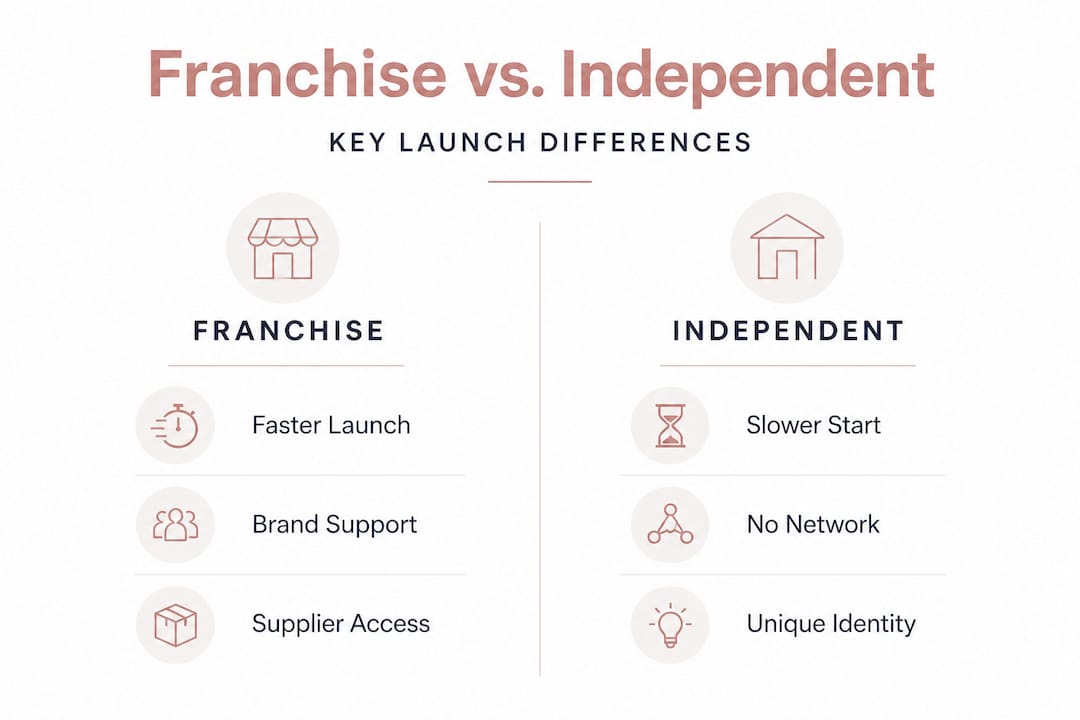
Here is how franchising compares to going independent across several key dimensions:
| Factor | Franchise | Independent |
|---|---|---|
| Time to launch | Faster | Slower |
| Brand recognition | Established | Must be built |
| Supplier access | Provided | Self-sourced |
| Marketing support | Included | Self-funded |
| Scaling to new locations | Structured | Complex |
| Risk level | Lower | Higher |
The Bonordic franchise program is built around these advantages, offering entrepreneurs a ready-made platform that includes a localized online store, product sourcing, and ongoing operational support.
Pro Tip: When evaluating any franchisor, ask specifically about their network size and how they support franchisees in your target country. A franchisor with proven local expansion experience is significantly more valuable than one with a strong home market but limited international track record. As BoConcept’s French expansion demonstrates, steady, network-backed growth outperforms rapid, unsupported expansion every time.
What makes the Scandinavian home decor franchise market unique?
General franchise benefits apply across many sectors. But the Scandinavian home decor niche has specific characteristics that make it particularly well-suited to the franchise model in Europe.
The aesthetic has broad, cross-cultural appeal. Scandinavian design is not a trend. It is a durable style philosophy built on minimalism, natural materials like wood and linen, neutral color palettes, and functional beauty. These qualities resonate with consumers in France, Spain, Italy, the Netherlands, and Germany, markets with very different local design traditions but a shared appreciation for quality and simplicity.
Premium positioning means stronger margins. Scandinavian-inspired home decor brands typically operate in the mid-to-premium price segment. This matters for franchisees because higher price points support better margins, which in turn support the fees and investments that come with franchising. Selling a well-designed lamp for 180 euros is a very different business than competing on price with mass-market retailers.
Demand is rising in key European markets. French and Spanish consumers, for example, are increasingly drawn to Nordic aesthetics. Markets like Nordicdesign in Spain and Nordicdeco in France reflect this demand directly, with localized platforms built to serve design-conscious shoppers in those specific markets.
“Strong network support is critical for success in competitive premium markets.” — BoConcept’s European expansion strategy
The global home decor market is projected to grow at a compound annual growth rate of around 4 to 5 percent through the late 2020s, with premium and design-led segments outperforming the broader category. European consumers allocate a meaningful share of discretionary spending to home furnishings, particularly post-pandemic, when home environments became a higher priority.
Scandinavian-inspired products like elegant Scandinavian lighting illustrate the kind of premium, design-forward items that attract loyal customers willing to pay for quality. The Bonordic partners network reflects the breadth of this opportunity across multiple European territories.
Key characteristics that define this niche:
- Minimalist design with timeless appeal, not trend-dependent
- Natural and sustainable materials that align with European consumer values
- Strong online and offline demand across multiple countries
- Premium price positioning that supports viable franchise economics
- Clear brand differentiation from mass-market competitors like IKEA
Essential steps to launch your franchise
Understanding the market opportunity is one thing. Moving from interest to a functioning franchise requires a clear sequence of actions. Here is a realistic step-by-step path for European entrepreneurs:
Research the market in your target country. Understand local consumer preferences, competitor presence, and the general demand for Scandinavian-inspired home decor. Look at what is selling online and which price points perform best in your region.
Evaluate franchise partners carefully. Not all franchisors offer the same level of support. Review their existing network, expansion history, and what they specifically provide to franchisees. Ask for references from current partners.
Assess exclusivity and territorial rights. A franchise with protected territory means you are not competing with another franchisee in your own market. This is a critical factor for long-term viability. The Bonordic franchise overview emphasizes exclusive territorial rights as a core part of its model.
Prepare a business plan. Even with a franchisor’s support, you need a clear financial plan. This includes startup costs, projected revenue, operating expenses, and break-even timeline. Most franchisors will want to see this before approving your application.
Secure financing. Franchise fees, store setup, and initial inventory (if applicable) require capital. Explore options including personal savings, bank loans, and any small business support programs available in your country.
Complete onboarding and training. Once approved, go through the franchisor’s training program thoroughly. This is where you learn the operational systems, brand standards, and customer service expectations that drive consistent performance.
Launch and engage continuously. Opening is just the beginning. Ongoing engagement with the franchisor’s network, participation in updates, and consistent execution of the brand standards are what drive long-term success.
Pro Tip: Prioritize franchisors with documented expansion success in your specific target country. A franchisor who has already navigated the legal, logistical, and cultural nuances of your market will save you significant time and money. You can book a meeting with Bonordic to discuss your specific market and get a clear picture of what the onboarding process looks like.
European market entry also involves regulatory considerations. Each country has its own rules around retail business registration, consumer protection laws, and import regulations for home goods. Your franchisor should be able to guide you through these requirements, but it is worth consulting a local business attorney as well.
Franchisor support and the power of a strong network
Once your store is running, the quality of your franchisor’s ongoing support becomes the most important factor in your continued success. This is especially true in the premium home decor segment, where product quality, brand consistency, and customer experience are non-negotiable.
“European expansion favors experienced retail entrepreneurs; strong network support is critical for success in competitive premium markets.” — BoConcept’s French market strategy
What does strong network support actually look like in practice? Here are the key elements that matter most:
- Supply chain access. Reliable sourcing from vetted European suppliers means you can maintain consistent product quality and availability without managing supplier relationships yourself.
- Regular design and product updates. Scandinavian home decor evolves. Franchisors who update their product lines seasonally keep your store relevant and give customers reasons to return.
- Localized marketing support. Campaigns that work in Denmark may need adaptation for Spain or France. A good franchisor provides localized marketing assets that fit your specific market.
- Troubleshooting and operational guidance. When problems arise, whether with a supplier, a logistics issue, or a customer complaint, having a direct line to experienced support saves time and protects your reputation.
- Peer learning through the partner network. Access to other franchisees in the partner network allows you to learn from their experiences, share what is working, and avoid common mistakes.
Network events, whether virtual or in-person, are also valuable. They create opportunities to stay aligned with the brand’s direction, connect with other franchisees, and get early access to new products or strategies. Franchisors who invest in their network create a collaborative environment that benefits everyone in it.
Why support networks—not just great design—make or break your franchise
Most entrepreneurs evaluating a home decor franchise focus heavily on the product. The furniture looks beautiful. The lighting is elegant. The brand aesthetic is exactly right. These things matter, but they are not what separates successful franchisees from struggling ones over time.
The real differentiator is the quality of the support network behind the brand. A stunning product catalog with weak operational backing leads to inconsistent execution, supply problems, and customer experience failures. None of those are visible in a franchise brochure, but all of them show up within the first year of operation.
The best franchisors build collaborative ecosystems. They create structured communication between franchisees, share performance data across the network, and actively update their systems based on what is working in the field. This is fundamentally different from a franchisor who simply provides a brand license and a product list, then leaves you to figure out the rest.
A common pitfall among new franchisees is over-investing in store aesthetics and under-investing in understanding the operational systems. The store can look perfect and still underperform if the franchisee does not have reliable logistics, clear marketing guidance, and access to timely support when issues arise.
The lesson from established expansions like BoConcept’s methodical growth in France is that steady, network-backed progress consistently outperforms fast, unsupported launches. Two well-supported stores performing consistently are worth more than five stores launched quickly with inadequate backing.
When you evaluate an exclusive franchise model, look past the product catalog. Ask hard questions about the support infrastructure. How often does the franchisor communicate with partners? What does troubleshooting look like? How are new products introduced to the network? The answers to these questions tell you more about your likely success than any product photo ever will.
Explore Scandinavian home decor franchise opportunities with Bonordic
The insights in this guide point toward one clear conclusion: the Scandinavian home decor franchise market offers real opportunity for entrepreneurs who choose the right partner and commit to the system.
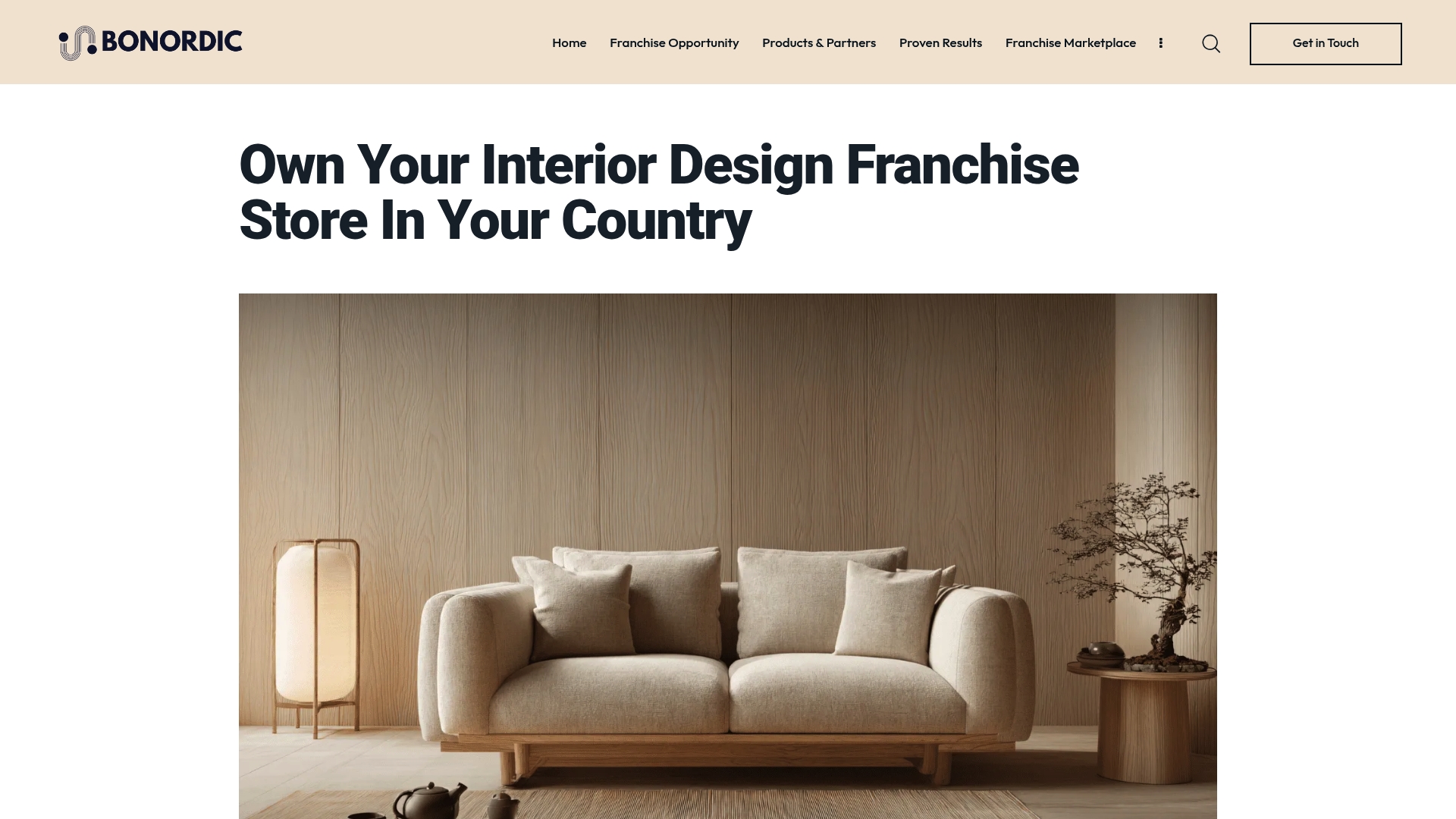
Bonordic offers an exclusive Bonordic franchise model built specifically for the European premium home decor market. Partners receive protected territorial rights, a fully localized online store, curated product sourcing from European suppliers, and ongoing operational support. Opportunities are currently available in key markets including Nordicdesign Spain and Nordicdeco France, along with other European territories. If you are ready to explore whether a Bonordic franchise fits your goals, the next step is to review the franchise details and schedule a personal presentation with the team.
Frequently asked questions
What is a home decor franchise in simple terms?
A home decor franchise is a retail business where you operate under an established brand, following their system and paying fees, in exchange for brand support, marketing, and product sourcing. You get a proven model rather than building one from scratch.
How much experience do I need to succeed in the Scandinavian home decor franchise market?
Prior retail business experience is strongly favored, particularly in the premium segment where network support is critical and competition is high. Operational familiarity with retail management, customer service, and basic financial planning gives you a clear advantage.
Is the Scandinavian-style home decor franchise model scalable across different European countries?
Yes. With strong network support and local adaptation, the model has shown successful European expansion across France, Spain, and other markets. Protected territorial rights are key to making multi-market scaling viable.
What are the most important factors in choosing a franchisor?
Prioritize franchisors with proven European expansion, established support networks, and a brand with demonstrated local demand. Exclusivity of territory and the quality of ongoing operational support are equally important.
Recommended
- Nordicdesign.es – Spain 🇪🇸 | Bonordic.com
- Nordicdeco.fr – France 🇫🇷 | Bonordic.com
- Bonordic Franchise – Interior Design & Lighting Business
- Nordixa.dk – Denmark 🇩🇰 | Bonordic.com
- Business branding with stamps: Practical steps for small businesses – Stamp Design 4U
- FinnLumen | Skandinavische runde LED-Deckenleuchten – Beiermode.de – Breuermode.de