Premium home decor is not reserved for elite boutiques in Paris or Milan. That assumption has kept many capable entrepreneurs from entering one of Europe’s most resilient retail segments. Scandinavian design has changed the rules. It brings together craftsmanship, functionality, and visual restraint in a way that appeals to a broad but quality-conscious customer base. For European entrepreneurs, this creates a real opening. Franchise models built around Nordic interior design offer a structured path into premium retail, with built-in brand recognition, supplier networks, and operational support that make market entry far more manageable than starting from scratch.
Table of Contents
- Defining high-end home decor: What does it really mean?
- Scandinavian design: The foundation of premium retail franchises
- Franchise strategies: Customization, ‘affordable luxury,’ and retail differentiation
- Building a profitable European retail business with high-end Scandinavian decor
- The uncomfortable truth about premium home decor franchises
- Take your next step with premium Scandinavian decor franchises
- Frequently asked questions
Key Takeaways
| Point | Details |
|---|---|
| Scandinavian design advantage | Nordic brands blend craftsmanship, sustainability, and timeless appeal, uniquely positioning franchises for premium markets. |
| Customization drives profit | Offering tailored decor solutions and affordable luxury enhances attractiveness to savvy retail customers. |
| Brand selection is critical | Choosing the right franchise partner with design expertise and reliable support is key to sustainable business growth. |
| Focus on market differentiation | Successful entrepreneurs stand out by emphasizing design quality, exclusivity, and superior customer experience. |
Defining high-end home decor: What does it really mean?
High-end home decor is often misunderstood. Many people assume it simply means expensive. In practice, it refers to a specific combination of qualities: superior materials, skilled craftsmanship, thoughtful design, and a product that holds its value over time. These are not just marketing terms. They reflect real differences in how products are made and how long they last.
High-end decor products share several defining characteristics:
- Materials: Natural wood, solid metals, hand-finished ceramics, and premium textiles rather than synthetic substitutes
- Craftsmanship: Products made with attention to detail, often by skilled artisans or using precise manufacturing processes
- Design integrity: Pieces that follow a coherent aesthetic philosophy rather than chasing seasonal trends
- Durability: Items built to last years or decades, not just one product cycle
- Exclusivity: Limited production runs, unique colorways, or brand heritage that adds perceived and actual value
Scandinavian brands fit squarely in this definition. Brands like Carl Hansen & Søn, Hay, Muuto, and Gubi are recognized globally for craftsmanship and timeless design. These are not fast-furniture labels. They represent a design philosophy rooted in Nordic culture: simplicity, honesty in materials, and long-term usability.
“Scandinavian design is not about decoration. It’s about function elevated to an art form. Every piece should serve a purpose, and serve it beautifully.”
This philosophy translates directly into retail value. Customers who buy high-end Scandinavian pieces are not impulse buyers. They research, compare, and invest. That means your retail environment, your product knowledge, and your service quality all carry more weight than in mass-market retail. It also means higher average transaction values and stronger customer loyalty when you get it right.
Scandinavian design: The foundation of premium retail franchises
Nordic design’s global appeal is not accidental. It grew from a cultural emphasis on practical beauty. Scandinavian countries have long winters and a strong tradition of making indoor spaces comfortable, functional, and visually calm. That sensibility has resonated far beyond Scandinavia, particularly in urban European markets where customers want homes that feel considered rather than cluttered.
The core elements of Nordic design that drive retail success include:
- Minimalism: Clean lines, neutral palettes, and a “less is more” approach that never feels cold
- Sustainability: A genuine commitment to responsible sourcing, eco-friendly materials, and long product lifespans
- Functionality: Every item serves a clear purpose, which makes it easier to sell because the value proposition is obvious
- Warmth: Despite minimalism, Nordic design uses natural textures, soft lighting, and organic shapes to create inviting spaces
These qualities make Scandinavian decor particularly strong in the franchise context. Customers already understand and trust the aesthetic. Your job as a franchisee is to connect them with the right products and the right experience.
Here is a comparison of key features across leading Scandinavian franchise models:
| Brand | Market positioning | Store count | Customization | Sustainability focus |
|---|---|---|---|---|
| BoConcept | Affordable luxury | 300+ globally | High | Moderate |
| Kvik | Kitchen and bath premium | 180+ in 13 countries | Moderate | High |
| Bonordic | Online Scandinavian retail | Growing European network | High | High |
| JYSK | Value Nordic | 3,000+ globally | Low | Moderate |
Kvik operates over 180 stores across 13 countries as part of Ballingslöv, one of Europe’s major kitchen and bath groups. That scale reflects real consumer demand for quality Nordic design in everyday living spaces.
Pro Tip: When evaluating Nordic franchise options, look beyond the brand name. Ask specifically about franchisee support, territory exclusivity, and how the franchisor handles product sourcing. These details determine your day-to-day operational reality far more than the brand’s marketing materials.
The premium Scandinavian decor selection available through well-structured franchise models gives you access to curated products that align with current market demand without requiring you to source independently. This is a significant operational advantage, especially in the early stages of building your business.
If you are looking at specific markets, options like Spanish Scandinavian decor show how localized franchise stores can serve regional customers while maintaining a consistent Nordic brand identity.
Franchise strategies: Customization, ‘affordable luxury,’ and retail differentiation
To make your retail franchise stand out, understanding strategic approaches is essential. The premium decor market is not monolithic. Within it, there are distinct positioning strategies, and choosing the right one for your market and customer base is a critical business decision.
Here are three main strategies that successful Scandinavian decor franchises use:
- Customization services: Offering customers the ability to personalize furniture, finishes, or configurations. This increases average order value and creates a more engaging in-store or online experience. It also builds loyalty because customers feel ownership over their choices.
- Affordable luxury positioning: This is the space between mass-market and true luxury. BoConcept’s franchise model exemplifies this approach, offering premium Danish design with strong support systems and customization options. Customers get quality and design credibility without paying luxury prices. This positioning is particularly effective in mid-to-large European cities with a growing professional class.
- Design expertise as a differentiator: Training your team to act as genuine design advisors, not just sales staff. When customers trust your team’s knowledge, they return. They also refer friends. This approach contrasts sharply with mass-market retailers where staff turnover is high and product knowledge is shallow.
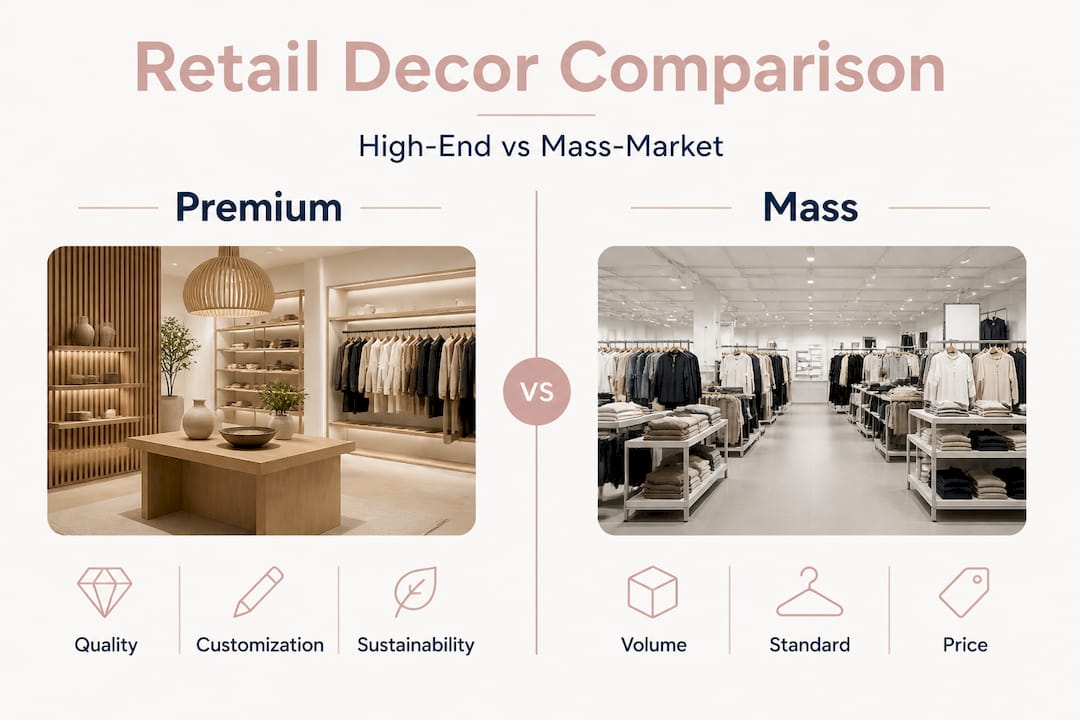
Here is how high-end franchise models compare to mass-market alternatives across key retail dimensions:
| Feature | High-end Scandinavian franchise | Mass-market retailer |
|---|---|---|
| Average transaction value | High | Low to moderate |
| Customer loyalty | Strong | Weak |
| Product lifespan | Long | Short |
| Design expertise required | Yes | Minimal |
| Sustainability credentials | Strong | Variable |
| Franchise support | Structured and ongoing | Often limited |
Pro Tip: Sustainability is not just a values statement. It is a sales tool. Customers in premium segments actively look for brands that use responsibly sourced materials and have transparent supply chains. Work with customization service partners who can document their sourcing practices. This gives your sales team concrete talking points and builds customer confidence.
The mass-market versus high-end distinction also shows up in customer behavior. High-end buyers spend more time in the decision process. They visit stores multiple times, ask detailed questions, and read reviews carefully. This means your store environment, staff training, and follow-up processes matter significantly. Invest in these areas early and you will see the payoff in repeat business and referrals.
Building a profitable European retail business with high-end Scandinavian decor
With strategic positioning in place, here’s how to put theory into practice and build a thriving business. Launching a premium decor franchise in Europe requires a structured approach. Skipping steps in the early stages creates problems that are harder to fix later.
Step one: Market analysis. Before committing to a franchise, research your target city or region. Look at household income levels, existing competition, and local design culture. Cities with a strong professional population and limited premium decor options represent the best opportunities.
Step two: Brand selection. Not all Scandinavian franchise brands are equal. Evaluate them on territory exclusivity, support quality, product range, and financial requirements. A brand that offers protected territory rights gives you a clear competitive advantage.

Step three: Setup and localization. A good franchise partner handles much of the technical setup, including your online store, logistics, and supplier connections. Your job is to localize the experience. Understand what your specific customers value and reflect that in your merchandising and communication.
Step four: Team building and training. Your team is your most important asset. Hire people who are genuinely interested in design and can hold informed conversations with customers. Train them on product knowledge, sustainability credentials, and the brand’s design philosophy.
Step five: Customer experience optimization. Premium customers expect a premium experience at every touchpoint. This includes your physical or digital storefront, your response times, your packaging, and your after-sale service.
Key operational practices that directly impact profitability:
- Maintain consistent visual merchandising that reflects the brand’s aesthetic standards
- Track inventory carefully to avoid overstock on slow-moving items
- Build relationships with local interior designers and architects who can refer clients
- Use customer data to personalize follow-up communication and product recommendations
- Monitor competitor pricing and positioning without letting it drive your decisions
Kvik’s network of 180+ stores across 13 European countries demonstrates that there is real, sustained demand for quality Nordic design across diverse markets. This is not a niche trend. It is a durable segment with consistent growth.
Markets like France and the Netherlands show strong appetite for premium Scandinavian aesthetics. Options like French Scandinavian decor and Dutch premium decor illustrate how the franchise model adapts to different European markets while keeping the core Nordic identity intact.
The uncomfortable truth about premium home decor franchises
Most guides on franchise opportunities focus on the upside. Revenue potential, brand recognition, and growing market demand all get plenty of attention. What gets less attention is the part that actually determines whether a franchise succeeds or fails.
The first uncomfortable truth is that local adaptation matters more than most franchisees expect. Scandinavian design has universal appeal, but customer behavior varies significantly across European markets. A product mix that sells well in Amsterdam may sit untouched in Seville. A price point that feels accessible in Copenhagen may feel steep in Warsaw. Franchisees who treat the brand’s standard playbook as a fixed script, rather than a starting framework, often struggle in their first two years.
The second truth is about supply chain resilience. Premium decor franchises depend on consistent product quality and reliable delivery timelines. When a supplier misses a deadline or a product arrives damaged, your customer relationship takes the hit, not the supplier’s. Build buffer stock on your best-selling items and maintain open communication with your franchise partner about supply issues. Silence on supply problems almost always makes them worse.
The third truth is about trend chasing. The premium decor market rewards consistency, not novelty. Customers who invest in high-end pieces want to know that the brand they trust today will still be relevant in five years. Franchisees who constantly pivot their product focus to chase what’s trending on social media undermine the very stability that makes premium retail work. The Scandinavian interior design franchise model is built on enduring design principles, not seasonal fads. Lean into that.
Pro Tip: Focus on the customer experience as a whole, not just the product. In premium retail, the experience of buying is part of what customers are paying for. A smooth, knowledgeable, and personalized interaction builds the kind of loyalty that no discount can replicate.
The franchisees who build genuinely profitable businesses in this space share one common trait. They treat their franchise as a long-term business, not a short-term revenue play. They invest in their team, their store environment, and their customer relationships consistently, even when short-term results are slower than expected.
Take your next step with premium Scandinavian decor franchises
If you have been evaluating franchise opportunities in the European home decor market, the information in this article gives you a solid foundation for making an informed decision. The next step is moving from research to action.
Bonordic offers franchise opportunities across multiple European markets, each with protected territorial rights and a fully supported setup process. Whether you are exploring the Spanish franchise opportunity or want to understand the full scope of what exclusive franchise rights include, the details are available and the team is ready to answer your questions. The most practical next step is to book a franchise presentation and get a clear picture of what launching your own premium Scandinavian decor store actually involves. No pressure, no vague promises. Just a structured conversation about a real business opportunity.
Frequently asked questions
What distinguishes high-end home decor from mass-market options?
High-end home decor is defined by craftsmanship, quality materials, exclusivity, and enduring design. Brands like Carl Hansen & Søn, Hay, and Muuto exemplify this standard, unlike mass-market products that prioritize affordability and production volume over lasting quality.
Which Scandinavian brands offer home decor franchise opportunities?
Kvik, BoConcept, and Bonordic are among the brands offering structured franchise models. Kvik operates 180+ stores across 13 countries, while BoConcept’s affordable luxury model focuses on design expertise and customization services.
How can entrepreneurs maximize profitability in high-end decor retail?
Focus on customization, sustainability credentials, and a superior customer experience to separate your offer from mass-market competitors. BoConcept’s franchise approach shows that combining design expertise with strong operational support is a proven path to profitability.
What are the operational challenges of running a premium decor franchise?
The main challenges include managing supply chain reliability, maintaining consistent design standards across all customer touchpoints, and adapting your product mix and communication style to local customer preferences in your specific European market.
Recommended
- Bonordic Franchise with Exclusive Rights | Bonordic.com
- Bonordic Franchise with Exclusive Rights | Bonordic.com
- Nordicdesign.es – Spain 🇪🇸 | Bonordic.com
- Nordixa.dk – Denmark 🇩🇰 | Bonordic.com