Most entrepreneurs look at modern interior design and see furniture. What they miss is the business engine underneath it. Europe’s appetite for Scandinavian-inspired home decor is not slowing down, and the Nordic retail furniture market was valued at USD 13.26 billion in 2024, with projections pointing to USD 23.17 billion by 2033. That is a compound annual growth rate of 6.38%, driven by real consumer demand, not speculation. For entrepreneurs looking at franchise opportunities in interior design, this market offers a clear, data-backed entry point.
Table of Contents
- What is modern interior design?
- Why Scandinavian modern design dominates the European market
- Elements of a successful modern interior design business
- Modern interior design trends to watch in 2026
- A franchise owner’s perspective: What really drives success in modern interior design
- Explore franchise opportunities in Scandinavian modern design
- Frequently asked questions
Key Takeaways
| Point | Details |
|---|---|
| Scandinavian design is booming | The Nordic furniture market is rapidly growing with high demand for modern living room pieces. |
| Modern style equals business opportunity | Modern interior design’s focus on comfort and functionality opens doors for profitable franchise models. |
| Franchising drives market growth | Well-known brands use franchising to quickly scale and maintain a competitive edge in Europe. |
| Trends to leverage for 2026 | Eco-friendly, multi-use furniture and digital-first customer experiences will lead the next wave. |
| Operational mastery is essential | Business success comes from combining great design with strong supply chains and local adaptation. |
What is modern interior design?
Modern interior design is a specific style, not a catch-all term for anything that looks current. It refers to a design philosophy rooted in the early to mid-20th century that prioritizes clean lines, functional layouts, and the deliberate use of natural light. Every element in a modern interior has a purpose. Decoration for its own sake is removed. What remains is a space that feels open, ordered, and livable.
This style is often confused with minimalism, but the two are distinct. Minimalism takes restraint to an extreme, stripping spaces down to the fewest possible elements. Modern design allows for warmth, texture, and personality, as long as those elements serve a function. Traditional design, by contrast, favors ornate details, layered textiles, and historical references. Modern design avoids all of that.
Scandinavian design sits within the modern tradition but adds its own character. It incorporates natural materials like wood, wool, and linen. It uses light colors to maximize brightness in northern climates. It brings in the concept of hygge (a Danish and Norwegian word meaning coziness and comfort) to make functional spaces feel genuinely welcoming. This combination of practicality and warmth is what makes Scandinavian modern design so commercially appealing.
Key features that define modern interior design include:
- Clean lines in furniture silhouettes and architectural details
- Neutral and natural color palettes, including whites, grays, warm beiges, and earth tones
- Functional furniture that serves multiple purposes or maximizes storage
- Natural materials such as solid wood, stone, linen, and leather
- Open floor plans with deliberate use of negative space
- Minimal ornamentation, with decor chosen for quality over quantity
Understanding these features is not just useful for design decisions. It directly shapes your product selection, store layout, and marketing when you enter the interior design business opportunity as a franchise partner. The Nordic retail furniture market is on track to reach USD 23.17 billion by 2033, and the businesses best positioned to capture that growth are those that understand what modern design actually means to consumers.
Pro Tip: When building a product catalog for a modern interior design store, focus on versatility. A sofa that works in both a compact apartment and a large family home will outsell a niche statement piece every time.
Why Scandinavian modern design dominates the European market
Scandinavian modern design has moved well beyond its regional origins. It now shapes purchasing decisions across Western and Central Europe, from Spain to France to Denmark. The reasons are practical. Urban Europeans live in smaller spaces and want furniture that is both functional and visually calm. Scandinavian design delivers exactly that.
The market data confirms this shift. The Nordic retail furniture sector is growing from USD 13.26 billion in 2024 to a projected USD 23.17 billion by 2033. That growth is not uniform across product categories. Living room furniture is the primary driver, reflecting how consumers prioritize the spaces where they spend the most time.
| Market indicator | 2024 value | 2033 projection |
|---|---|---|
| Nordic retail furniture market | USD 13.26B | USD 23.17B |
| CAGR | 6.38% | Sustained through 2033 |
| Leading category | Living room furniture | Continued dominance |
| Key market player | JYSK (~10% European share) | Accelerating growth |
Several factors explain why Scandinavian modern design specifically outperforms other styles in European markets:
- Eco-conscious appeal: Nordic design emphasizes natural, sustainable materials, which aligns with growing European consumer values around environmental responsibility.
- Urban suitability: Compact, multi-functional furniture fits the realities of city living in markets like Paris, Barcelona, and Copenhagen.
- Timeless aesthetics: Scandinavian modern design does not go out of style quickly. Consumers see it as a long-term investment, not a trend purchase.
- Broad demographic reach: The style appeals to young professionals furnishing their first apartment as much as it appeals to established homeowners renovating a family space.
- Emotional resonance: The hygge concept gives Scandinavian design an emotional layer that pure minimalism lacks. Consumers are not just buying furniture. They are buying a feeling.
For franchise operators, these factors translate directly into consistent demand. Markets like Spain and France show particularly strong appetite for Nordic aesthetics. A localized franchise in Nordicdesign.es Spain or Nordicdeco.fr France can tap into established consumer interest without needing to build brand awareness from scratch.
Elements of a successful modern interior design business
Understanding the market is one thing. Building a business that captures it is another. The most successful modern interior design franchises share a set of operational and strategic characteristics that go beyond good taste.
Here are the core elements that separate thriving franchises from struggling ones:
- A clear product identity: Customers should be able to identify your store’s aesthetic immediately. Every product in your catalog should reinforce the same design language. Inconsistency confuses buyers and weakens brand trust.
- A seamless customer journey: From the moment a customer discovers your store online to the moment their furniture arrives at their home, every step should feel smooth and intentional. Friction at any point, whether in the browsing experience, checkout process, or delivery, reduces conversion and repeat purchases.
- Reliable supplier partnerships: Product quality is non-negotiable in the premium segment. Sourcing from established European suppliers ensures consistency in materials, finish, and delivery timelines. This is an area where franchise systems have a structural advantage over independent retailers.
- Digital presence as a primary channel: European consumers research furniture purchases online before visiting a store or placing an order. A well-structured, localized online store is not optional. It is the primary point of contact for most buyers.
- Operational efficiency through franchise systems: JYSK’s ~10% European market share and its continued growth demonstrate what structured franchise operations can achieve at scale. The systems, supply chains, and brand standards that franchises provide give individual operators a significant head start.
- Staff training and product knowledge: Customers buying premium furniture expect informed guidance. Staff who understand design principles, material differences, and room planning will convert more browsers into buyers and generate stronger reviews.
The Bonordic franchise opportunity addresses several of these elements directly, providing a localized online store, curated product sourcing, and logistics support so franchise partners can focus on customer relationships and local market growth rather than back-end setup.
Pro Tip: Do not underestimate the value of room staging in your online store. Products shown in styled, realistic room settings consistently outperform products shown on white backgrounds in the premium home decor segment.
Modern interior design trends to watch in 2026
The Scandinavian modern design market is not static. Consumer preferences shift, and franchise operators who track those shifts can adjust their product mix and marketing ahead of the curve. Here are the trends shaping the market in 2026.
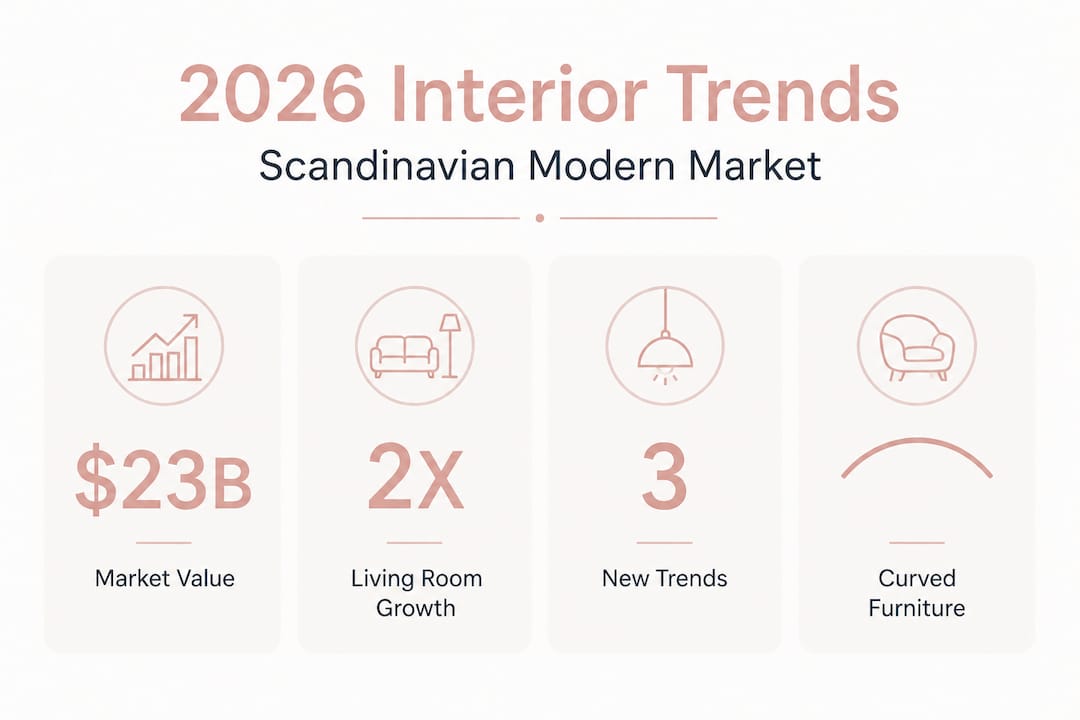
| Trend | Description | Business implication |
|---|---|---|
| Curved furniture silhouettes | Soft, rounded edges replacing sharp lines | Update sofa and chair selections |
| Warm neutral colorways | Terracotta, clay, and sand tones gaining ground | Expand beyond cool grays and whites |
| Tactile natural materials | Boucle, ribbed wood, and rough linen textures | Source products with sensory appeal |
| Modular and multi-purpose furniture | Adaptable pieces for flexible living spaces | Prioritize versatility in catalog |
| Eco-certified products | Consumers demanding verified sustainability credentials | Partner with certified suppliers |
| Digital-first shopping experience | AR tools and room planners driving online conversion | Invest in digital store features |
Living room furniture leads growth in the Nordic retail sector, and this is reflected in where consumer attention is focused. Sofas, coffee tables, shelving systems, and lighting are the highest-demand categories. Franchise operators who build depth in these categories, rather than spreading too thin across every room, will see stronger average order values.
Key areas to prioritize in your product strategy for 2026:
- Modular seating systems that allow customers to configure their own sofa layout
- Statement lighting in natural materials like rattan, wood, and ceramic
- Multi-functional storage that doubles as display furniture
- Sustainable textiles with clear material sourcing information
- Warm-toned wood finishes replacing cooler, gray-washed alternatives
For franchise operators in markets like Denmark, the Nordixa.dk Denmark platform is already positioned to serve consumers who are deeply familiar with Nordic design principles and expect a high level of product curation. A broader 2026 design business guide can help you map these trends to your specific market.
A franchise owner’s perspective: What really drives success in modern interior design
There is a common assumption among new entrants to this market: if the products look good, the business will follow. That assumption is wrong, and it is responsible for a large share of early-stage failures in the premium home decor space.
Design quality is the entry ticket, not the differentiator. Every serious player in this market offers well-designed, well-made products. What separates the businesses that grow consistently from those that plateau is operational discipline and local market knowledge.
The Nordic model teaches a specific lesson here. Brands that have scaled successfully across Europe did not do it purely on aesthetics. They built supply chains that could deliver reliably across multiple countries. They trained staff to speak knowledgeably about design and materials. They adapted their product mix to local tastes while maintaining a consistent brand identity. These are operational achievements, not design achievements.
Local adaptation is particularly important and often underestimated. A product mix that performs well in Stockholm may need adjustment for Madrid or Lyon. Consumer preferences around color, scale, and material vary by region. Franchise operators who take time to understand their local customer, through data, direct feedback, and community engagement, consistently outperform those who simply replicate a standard catalog.
The other factor most new entrants overlook is staff investment. Premium home decor is a considered purchase. Customers spend weeks or months researching before they buy. When they interact with your store, whether online or in person, they want to feel guided by someone who understands their needs. That expertise does not come automatically. It requires deliberate training and ongoing development.
Browsing the full range of Bonordic franchise options gives you a practical sense of how these principles are built into the franchise model from the start.
Explore franchise opportunities in Scandinavian modern design
You now have a clear picture of what modern interior design is, why Scandinavian design leads the European market, and what it takes to build a successful franchise in this space. The next step is connecting that knowledge to a concrete opportunity.
Bonordic offers franchise partners exclusive territorial rights, a fully localized online store, curated product sourcing from European suppliers, and logistics support, all designed to get you to market quickly without the burden of inventory management or technical setup. Whether you are evaluating your first franchise or expanding an existing retail operation, the structure is built to support growth from day one. Learn more about Bonordic franchise rights or take the first step and book a franchise presentation to discuss your specific market and goals with the team.
Frequently asked questions
What makes modern interior design Scandinavian?
Scandinavian modern design combines the clean lines and functionality of modern design with natural materials, light color palettes, and the warmth of hygge, creating spaces that feel both ordered and comfortable. The Nordic retail furniture market growing to a projected USD 23.17 billion by 2033 reflects how broadly this aesthetic resonates with European consumers.
How large is the Scandinavian furniture market in Europe?
The Nordic retail furniture market was valued at USD 13.26 billion in 2024 and is projected to reach USD 23.17 billion by 2033, representing a CAGR of 6.38%. This makes it one of the most consistent growth sectors in European retail.
Which furniture segment is growing fastest in the Nordic market?
Living room furniture leads growth in the Nordic retail furniture sector, reflecting consumer priorities around shared living spaces and investment in comfort and aesthetics at home.
Is franchising a common model in modern interior design?
Franchising is increasingly the preferred model in this sector because it allows rapid scaling with consistent brand standards. JYSK’s ~10% European share and continued market acceleration demonstrate the commercial power of a well-structured franchise operation in modern home decor.
What new trends are emerging in Scandinavian home decor?
Curved furniture silhouettes, eco-certified materials, warm neutral colorways, and modular multi-purpose pieces are the key trends shaping 2026. Living room furniture growth in the Nordic sector confirms that consumers are investing most heavily in the spaces where these trends are most visible.
Recommended
- Bonordic Franchise – Interior Design & Lighting Business
- Interior Design Business Opportunity (2026 Guide to Starting Without Inventory)
- Nordicdeco.fr – France 🇫🇷 | Bonordic.com